
The Genetics of Schizophrenia
Written by: Hannah Wood, Edited by: Rachel Baer, Andrew McCarty, MS, CGC, and Christina Nguyen, MS, CGC
Key Takeaways:
Schizophrenia affects approximately 1% of the global population
Genetic counselors can help people understand the likelihood of schizophrenia recurring in families and identify protective factors
Schizophrenia develops from both genetic and environmental factors
Researchers have identified some chromosomal changes (e.g., 22q11.2DS) that increase the risk of developing schizophrenia
PGx testing analyzes the genetic makeup of individuals to identify effective drugs and avoid unwanted side effects
The likelihood of schizophrenia recurring within a family depends on the relationship of the relative to the person with schizophrenia
Table of Contents:
What is Schizophrenia?
Genetic Counseling for Schizophrenia
What Causes Schizophrenia?
The Mental Illness Jar
Possible Genetic Basis of Schizophrenia
Pharmacogenomic Testing for Schizophrenia Treatment
What Does a Schizophrenia Diagnosis Mean for Family Members?
Word Bank:
16p11.2 duplication syndrome (16p11.2DS) – a syndrome caused by a chromosomal duplication located on the short arm of chromosome 16 that is associated with developing schizophrenia
22q11.2 deletion syndrome (22q11.2DS) – a syndrome caused by a chromosomal deletion located on the long arm of chromosome 22 that is associated with developing schizophrenia
3q29 deletion syndrome (3q29DS) – a syndrome caused by a chromosomal deletion located on the long arm of chromosome 3 that is associated with developing schizophrenia
Concordance rate – the likelihood that two related individuals share the same trait (e.g., schizophrenia, eye color, handedness)
Genetic counseling – a specialized health care service that provides education and support to people seeking information about how their genes might impact their health
Multifactorial inheritance – the result of multiple factors (i.e., genetics and environment) influencing the development of a disease (e.g., schizophrenia, cancer, heart disease)
Pharmacogenomic/Pharmacogenetic (PGx) testing – a test that analyzes the genetic makeup of individuals to determine how their body metabolizes various medications (e.g., antipsychotics, antidepressants, blood pressure medications, anaesthesia, etc.), to identify effective drugs that are least likely to have unwanted side effects, and, along with information about ideal dosages
Recurrence risk – the likelihood that a genetic condition (e.g., schizophrenia, cancer, heart disease) in one family member will occur again in another relative
Schizophrenia – a psychiatric condition characterized by delusions, hallucinations, disordered thinking, social withdrawal, reduced motivation, and memory deficits
The Mental Illness Jar – a model developed by a genetic counselor and doctor of neuropsychiatric genetics, Dr. Jehannine Austin, PhD, MSc, used to explain the environmental and genetic contributions to developing a mental illness (e.g., schizophrenia)
What is Schizophrenia?

Schizophrenia is a widely misunderstood psychiatric condition, from both a societal and scientific standpoint. It affects approximately 1% of the global population and is characterized by delusions, hallucinations, disorganized speech, and reduced emotional expression. For people with schizophrenia, these symptoms alter their perceived reality, and they can present in various combinations from person to person (1). Despite ongoing efforts to uncover its origin, the exact cause of schizophrenia remains unknown. Thus, it is apparent that people with schizophrenia deserve support and access to reliable resources to treat and manage their condition.
Genetic Counseling for Schizophrenia
Genetic counseling, provided by genetic counselors, is particularly helpful for individuals with a family history of a genetic disease and those who are either diagnosed with or suspected of having a genetic condition. Genetic counselors provide education and support to patients, along with facilitating decision-making and coordinating genetic testing when appropriate (2). While genetic testing for schizophrenia is not standard clinical practice, genetic counseling can help people understand the likelihood of schizophrenia recurring in families and identify factors contributing to its development (3, 4). Additionally, genetic counseling can also help to facilitate pharmacogenomic (PGx) testing for interested patients. Although PGx testing cannot determine the underlying cause of schizophrenia, it is a powerful tool that can identify the most effective medications to improve symptom management instead of trial-and-error prescriptions.
Recent data, including personal testimonies, also suggests there are clinical benefits to receiving psychiatric genetic counseling, including increased levels of empowerment and self-efficacy (4). For instance, one individual who was interviewed after their psychiatric genetic counseling appointment said that it validated their concerns and made them feel heard. Another interviewee reported that it made them feel empowered to manage what they’ve been given and take steps to protect themselves (3). These results indicate that genetic counseling is beneficial for people concerned about schizophrenia or other psychiatric conditions with hereditary components.
What Causes Schizophrenia?
The genetics of schizophrenia are not clear-cut, and no causal gene has been identified (5). However, several studies have reported a schizophrenia concordance rate of 41-65% in identical twins, where if one twin develops schizophrenia, the other twin has a 41-65% chance of also developing it (6). Because identical twins share the same DNA, the concordance rate would be 100% if schizophrenia were only determined by genetics. Since the observed rate is less than 100%, schizophrenia must develop from genetic and environmental factors. This multifactorial inheritance makes it especially challenging to identify causal genes.
The Mental Illness Jar
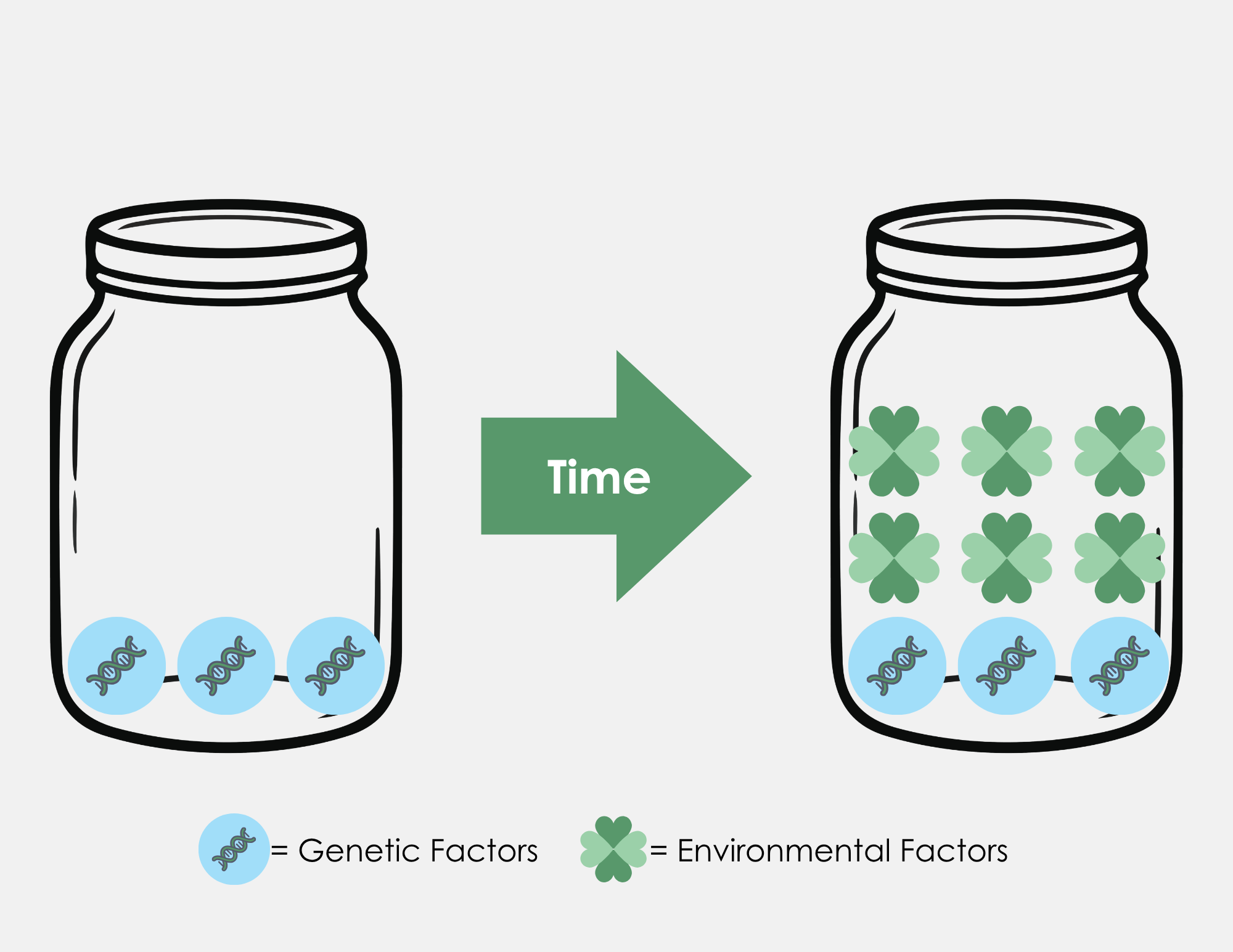
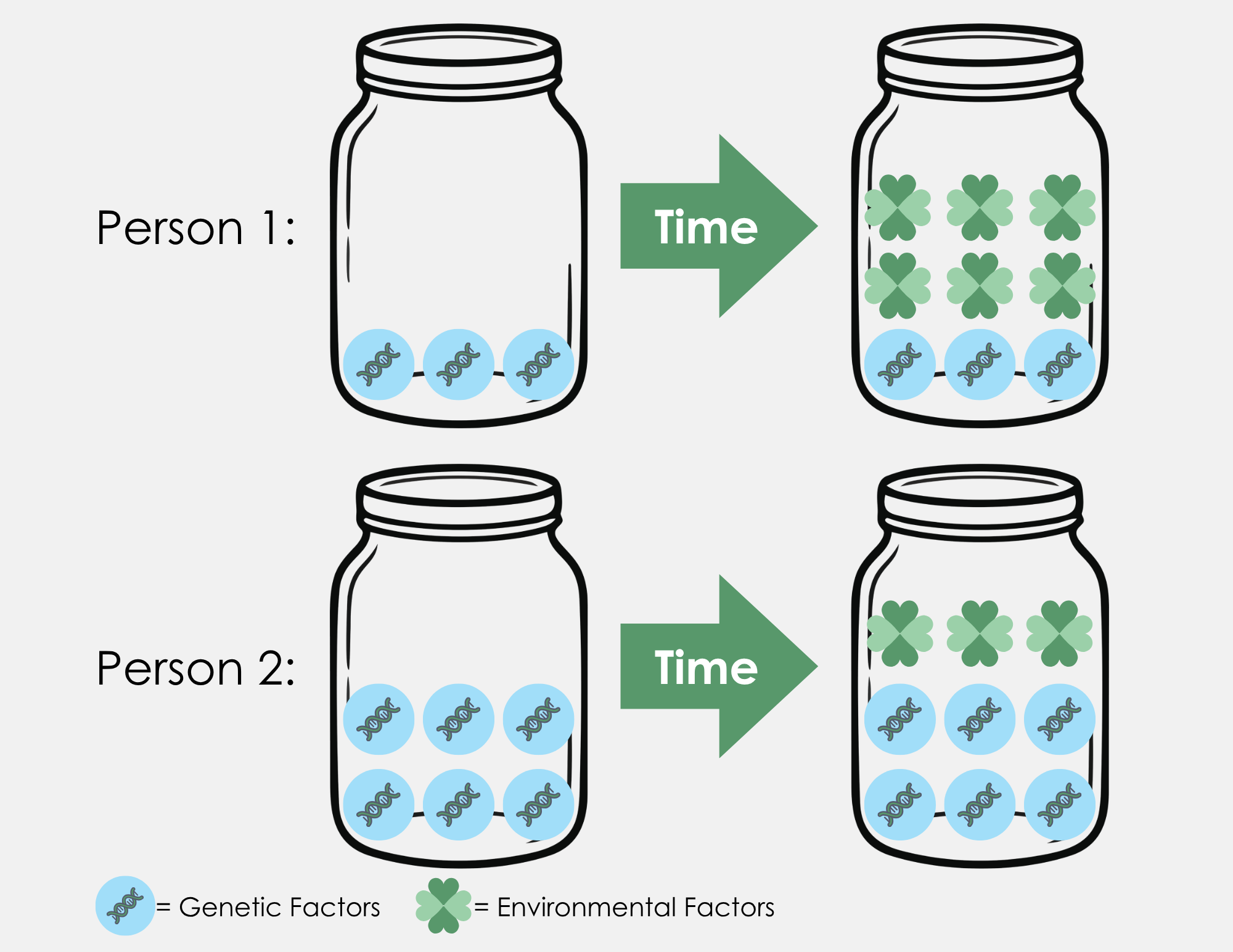
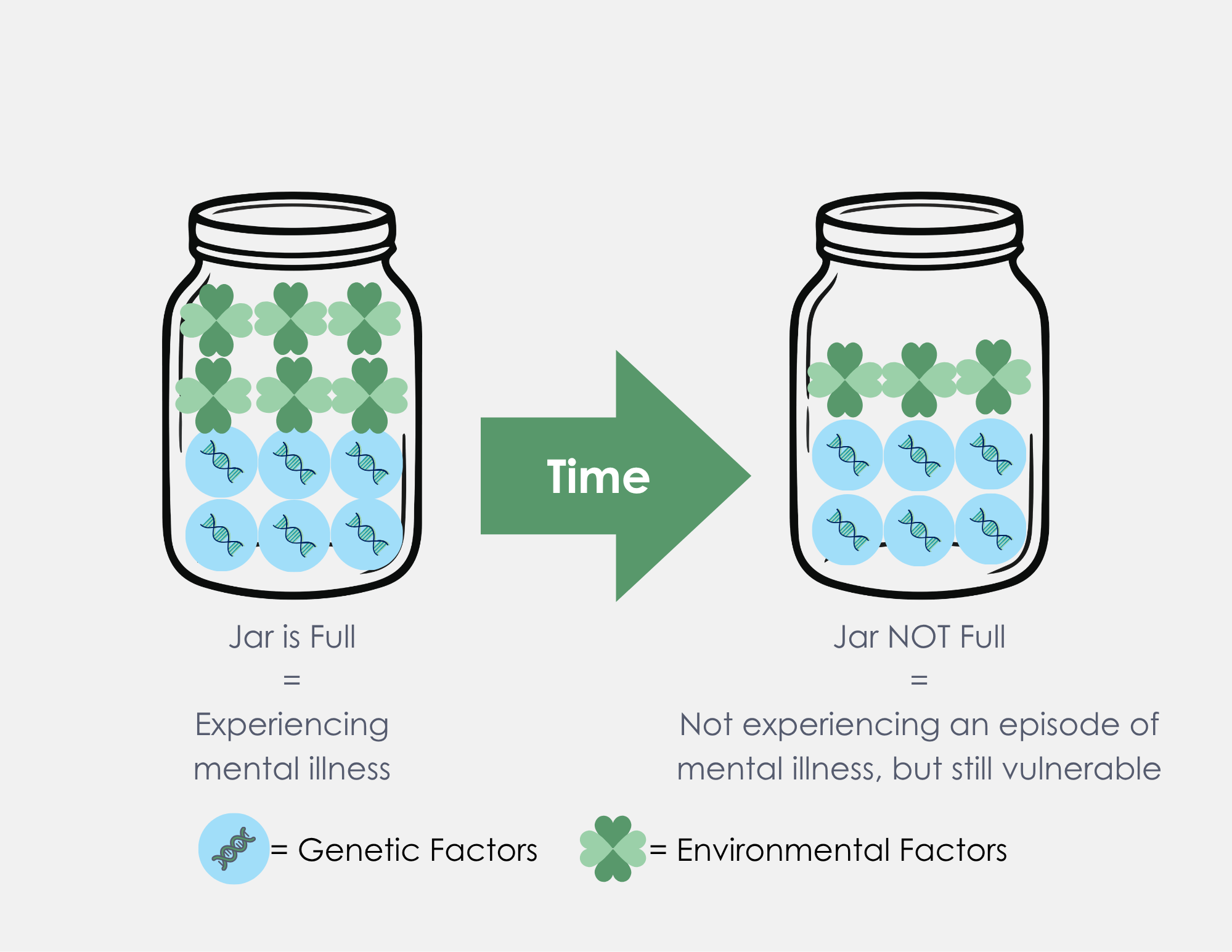
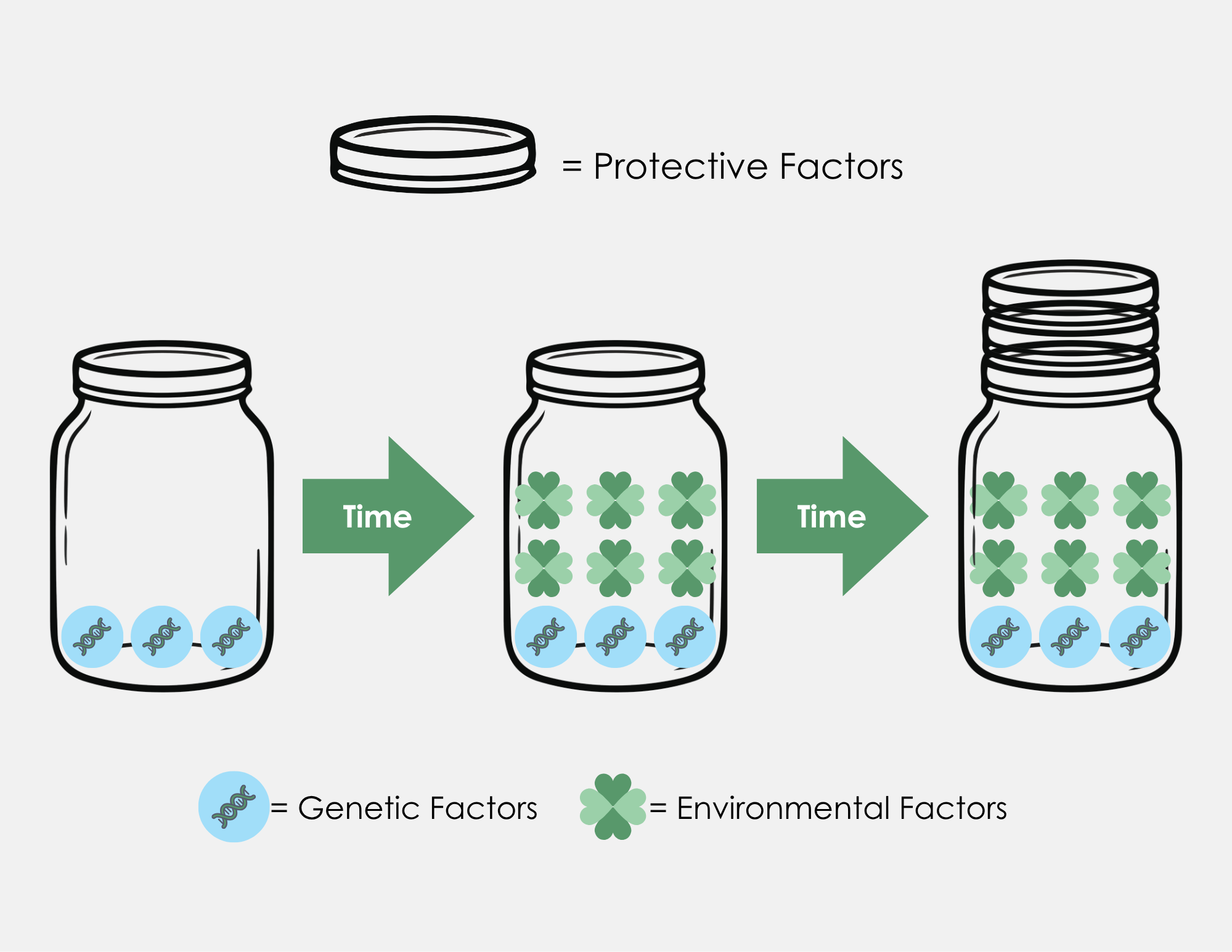
“Mental Illness Jar” images adapted with permission from Dr. Jeahannine Austin from “Peay H, Austin J. 2011. How to talk with families about genetics and psychiatric illness. W.W. Norton, New York”
One tool used by genetic counselors to explain the development of psychiatric conditions is “The Mental Illness Jar.” This model suggests that everyone has a metaphorical “jar” that can be filled by two major factors contributing to the development of mental illness: genetic vulnerabilities and environmental vulnerabilities. When the mental illness jar is full, it triggers an active episode of mental illness (3). Genetic vulnerabilities, represented by circles inside each jar, are passed down from parent to child and do not change over time. Environmental vulnerabilities, represented by clovers within the jar, develop from life circumstances and, unlike genetic vulnerabilities, they can change over time (7, 3). When someone is born with a high amount of genetic vulnerability, their jar is filled with more circles than someone with less genetic vulnerability. This predisposition makes them more likely to develop a psychiatric condition, because they require fewer environmental vulnerabilities to fill their jar.
Some of the environmental vulnerabilities that can contribute to the development of schizophrenia include pregnancy and birth complications, growing up in urban environments, early-life adversities, substance use, and socioeconomic factors (8, 9). While these life circumstances do not guarantee that someone will develop schizophrenia, they make them more susceptible, especially for those with increased genetic vulnerabilities. Genetic counselors can help individuals identify protective factors that create more space in the “jar” to discourage the onset or a flare-up of a psychiatric condition. These protective factors may include socialization, stress management, and journaling, and they are represented by rings that stack on top of the jar and make it taller (3).
“Mental Illness Jar” images adapted with permission from Dr. Jeahannine Austin from “Peay H, Austin J. 2011. How to talk with families about genetics and psychiatric illness. W.W. Norton, New York”
Possible Genetic Basis of Schizophrenia
As previously mentioned, the genetics of schizophrenia are complex, and no single causal gene has been found (5). However, researchers have repeatedly identified 22q11.2 deletion syndrome (22q11.2DS) as one potential genetic cause of schizophrenia (10). This genetic syndrome is characterized by learning difficulties, distinct facial features, palatal anomalies, and psychiatric conditions. Recent estimates suggest that approximately 25% of people with 22q11.2DS have schizophrenia, whereas about 1% of people with schizophrenia have 22q11.2DS (2, 10). Although people with 22q11.2DS represent a small subset of those with schizophrenia, it remains the most clinically recognizable genetic form of schizophrenia for which genetic testing is available (10).
In addition to 22qDS, other chromosomal changes have been identified that increase the risk of developing schizophrenia, including 16p11.2 duplication syndrome (16p11.2DS) and 3q29 deletion syndrome (3q29DS) (11).
16p11.2DS is characterized by low body weight from early childhood through adulthood, small head size, developmental delays, and an enhanced risk for various psychiatric conditions (12). It is estimated that people with 16p11.2DS are approximately 14 to 15 times more likely to develop schizophrenia than the general population, making it a substantial risk factor (13).
3q29DS, is characterized by executive function deficits and psychiatric manifestations (14). Similar to 22q11.2DS, approximately 20% of people with 3q29DS develop schizophrenia (14). However, the prevalence rate of 3q29DS is 1 in 35,000, whereas the prevalence of 22q11.2DS is 1 in 4,000, making it much less common (14, 10).
Pharmacogenomic Testing for Schizophrenia Treatment
While genetic testing for schizophrenia is limited, PGx testing is available for those managing their symptoms with medication(s). PGx testing can analyze the genetic factors within individuals that may influence their response to antipsychotics and antidepressants, amongst other medications. Genetic counselors can discuss the potential benefits and outcomes of PGx testing with patients to help them decide if it would be helpful for them. The test results can then be used by physicians to guide drug and dosage selection. It is particularly useful for those with a history of experiencing significant side effects or a lack of response (11).
What Does a Schizophrenia Diagnosis Mean for Family Members?
One responsibility of genetic counselors is to collect detailed family histories from patients. This practice is especially important when assessing the recurrence risk of a genetic condition or the likelihood of a genetic condition within a family affecting another relative. The recurrence risk of schizophrenia varies depending on the relationship of the relative to the person with schizophrenia (5, 15). See the table for reference.
The recurrence risk of schizophrenia is higher for first-degree relatives than second-degree and third-degree relatives, with full siblings and children of people with schizophrenia having the highest likelihood of developing the condition. Understanding recurrence risk is important for monitoring symptoms and identifying protective factors. Genetic counselors play a critical role in this process because they possess the expertise to discuss the complex origins of schizophrenia, genetic testing options, and family planning.

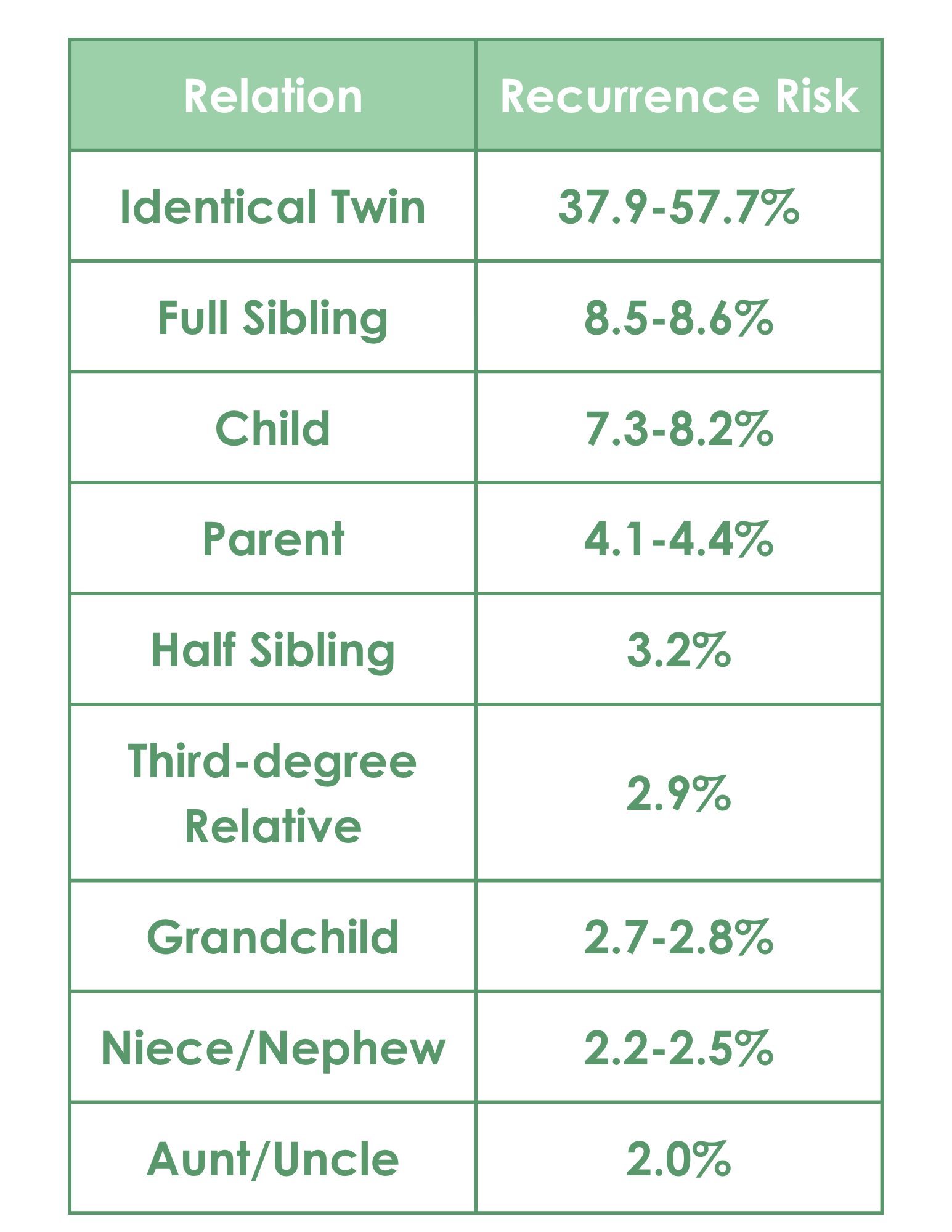
Disclaimer: The above percentages are from articles that were published in 2004 and 2016. The article published in 2004 used various twin and adoption studies to calculate schizophrenia recurrence risks in first, second, and third-degree relatives (5). The article published in 2016 used the Taiwan National Health Insurance Database to calculate schizophrenia recurrence risks in first and second-degree relatives (15). These recurrence risks are non-specific and can vary based on population and individual factors.
If you’d like to speak with a genetic counselor, click here to schedule
Citations:
Diagnostic and Statistical Manual of Mental Disorders. 5th ed. American Psychiatric Association; 2013.
Hodgkinson KA, Murphy J, O'Neill S, Brzustowicz L, Bassett AS. Genetic counselling for schizophrenia in the era of molecular genetics. Can J Psychiatry. 2001;46(2):123-130. doi:10.1177/070674370104600202. https://pmc.ncbi.nlm.nih.gov/articles/PMC3276586/
Austin JC. Evidence-based genetic counseling for psychiatric disorders: a road map. Cold Spring Harb Perspect Med. 2020;10(6):a036608. doi:10.1101/cshperspect.a036608. https://pmc.ncbi.nlm.nih.gov/articles/PMC7263094/.
Inglis A, Koehn D, McGillivray B, Stewart SE, Austin J. Evaluating a unique, specialist psychiatric genetic counseling clinic: uptake and impact. Clin Genet. 2015;87(3):218-224. doi:10.1111/cge.12415. https://pmc.ncbi.nlm.nih.gov/articles/PMC4318688/?tool=nihms.
Salleh MR. The genetics of schizophrenia. Malays J Med Sci. 2004;11(2):3-11. https://pmc.ncbi.nlm.nih.gov/articles/PMC3433970/.
Cardno AG, Gottesman II. Twin studies of schizophrenia: from bow-and-arrow concordances to star wars Mx and functional genomics. Am J Med Genet. 2000;97(1):12-17. https://pubmed.ncbi.nlm.nih.gov/10813800/.
Korf B. Multifactorial inheritance. [Video]. YouTube. Published March 23, 2016. Accessed July 31, 2025. https://www.youtube.com/watch?v=4fFy0lW1DyE.
Sandroni V, Chaumette B. Understanding the emergence of schizophrenia in the light of human evolution: new perspectives in genetics. Genes Brain Behav. 2025;24(1):e70013. doi:10.1111/gbb.70013. https://pmc.ncbi.nlm.nih.gov/articles/PMC11725983/.
Hany M, Rizvi A. Schizophrenia. StatPearls. StatPearls Publishing; 2024. https://www.ncbi.nlm.nih.gov/books/NBK539864/.
Bassett AS, Chow EW. Schizophrenia and 22q11.2 deletion syndrome. Curr Psychiatry Rep. 2008;10(2):148-157. doi:10.1007/s11920-008-0026-1. https://pmc.ncbi.nlm.nih.gov/articles/PMC3129332/.
Besterman AD. A genetics-guided approach to the clinical management of schizophrenia. Schizophrenia Research. 2024;267:462-469. doi.org/10.1016/j.schres.2023.09.042. https://www.sciencedirect.com/science/article/pii/S0920996423003535
Chromosome 16p11.2 duplication syndrome. MedGen. National Center for Biotechnology Information (US); 2026. https://www.ncbi.nlm.nih.gov/medgen/766321.
McCarthy SE, Makarov V, Kirov G, et al. Microduplications of 16p11.2 are associated with schizophrenia. Nat Genet. 2009;41(11):1223-1227. doi:10.1038/ng.474. https://pmc.ncbi.nlm.nih.gov/articles/PMC2951180/
Mulle JG, Gambello MJ, Sanchez Russo R, et al. 3q29 Recurrent Deletion. In: Adam MP, Bick S, Mirzaa GM, et al., editors. GeneReviews. Seattle (WA): University of Washington, Seattle; 1993-2026. https://www.ncbi.nlm.nih.gov/books/NBK385289/.
Chou IJ, Kuo CF, Huang YS, et al. Familial Aggregation and Heritability of Schizophrenia and Co-aggregation of Psychiatric Illnesses in Affected Families. Schizophr Bull. 2017;43(5):1070-1078. doi:10.1093/schbul/sbw159. https://pmc.ncbi.nlm.nih.gov/articles/PMC5581894/